28th July, 2015
400 railways stations to be redeveloped using Swiss Challenge method
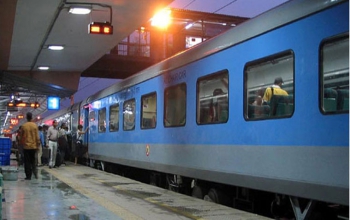
Union Finance Minister Arun Jaitley on July 16 said the Cabinet has approved the redevelopment of 400 Indian Railways stations, and added that they would be redone using the Swiss Challenge method. “The Cabinet has approved the redevelopment of railway stations. 400 railway stations to be redeveloped using the Swiss Challenge method. The Cabinet has also decided that 400 railway stations will be redeveloped across the nation,” Jaitley told media here. The Cabinet has also approved the review of FDI policy on various sectors provided in the FDI Policy Circular to simplify policy and to attract the FDI,” he added.
Volvo to export 100 'Made in India' buses to Europe
Swedish transport major Volvo will export about 100 buses made in India to Europe a year, a top company official said on July 14. "We will be the first bus company to export to the European market from India, taking advantage of lower manpower costs and neutral duty," Volvo Buses Corporation president Hakan Agnevall told reporters. At a meeting in the state secretariat here, Agnevall told Chief Minister Siddaramaiah that the company's Indian subsidiary would export about 100 buses a year to European countries from its manufacturing plant at Hoskote, about 40km from here. "Volvo India Ltd will invest an additional Rs.974 crore to expand its Hoskote plant, generating employment to 2,125 more people," the chief minister's office said in a statement. The Swedish firm had set up a truck and bus production plant in the then Bangalore Rural district during 1996-98, with an initial investment of Rs.900 crore and employed 2,076 people earlier. Volvo entered India, ostensibly, to foray into high-end truck segment, but got into the luxury buses with first move advantage as domestic rivals Tata Motors and Ashok Leyland have been contended rolling out ordinary buses for cities and semiluxury coaches for inter-city and inter-state routes. "Besides lower manpower cost and minimal overheads, we will avail customs duty exemptions on import of engines, components and accessories used in making buses for exports," said Volvo Buses vice president Akash Passey. Volvo invested in 2012 an additional Rs.400 crore in doubling its installed capacity to 1,500 units per annum. It employs about 1,000 people in its bus unit. "As the country's passenger transport market has been down over the last couple of years due to various factors, including recession, we could not fully utilise the production capacity as the demand or order was for 600-800 buses per annum," said Passey. Volvo India has been exporting luxury air-conditioned buses to South Asian countries like Bangaldesh, Maldives and Sri Lanka since 2003 and to South Africa since 2011, for multiple services, including inter-city, inter-state, long distance and within cities. Besides here, the company has a manufacturing base in Shanghai, Bangkok and Taiwan in Asia. "It's a milestone for us to export buses from India to developed markets in Europe though we are a European company and has a major presence there with a couple of manufacturing plants in the continent," said Agnevall. The type of luxury buses to be exported will be Euro-6 complaint for mass rapid transportation in European cities, where demand is about 5,000 units per annum. "We will use India as export hub overtime for developed markets like Europe, leveraging our manufacturing presence, with a strong vendor base," Agnevall added. By focusing on exports, the Indian subsidiary will also be able to face the cyclical domestic market demands, which have been linear over the years due to economic slowdown and lower orders from state-run corporations and private operators. Agnevell also invited Siddaramiah to visit Sweden to see electric buses the company operates in Stockholm and plans to bring to India in the near future. "The chief minister agreed to visit Sweden in September," the statement added.
Russia chooses Reliance Group for 'Make in India' frigates
With India close to choosing Grigorivich frigates for its navy, Russia is partnering Anil Ambani-led Pipavav Defence to build these ships under Prime Minister Narendra Modi's "Make in India" initiative, official sources said on July 16. They will be upgraded versions of Talwar-class ships, or the Russian equivalent of Krivak-III. Confirming this to IANS, at least two senior defence officials said a team from Russia evaluated three-four private and staterun shipyards as they were keen on an Indian partner if the ships were to be built in India. This will be a pre-condition for the order valued at $3-$3.5 billion. The sites evaluated were Pipavav's yard in Gujarat, Larsen and Toubro's unit at Ennore, and the state-run Cochin Shipyard in Kerala. Pipavav, a majority stake in which was acquired by the Reliance Group a few months ago, emerged the winner. "The Prime Minister's Office is closely watching the development," one of the two officials told IANS. "This is likely to be an order that will be placed on the government of Russia by our government." Incidentally, the development comes against the backdrop of the navy vice chief, Vice Admiral P. Murugesan, stating on Tuesday that India was exploring the possibility of getting upgraded Talwar-class ships and was in talks with Russia for its Grigorivich frigates technology. "As per our maritime perspective plan, we have to build a certain number of ships in a certain time. We are exploring the possibility to expedite the acquisition of certain number of ships," Murugesan told reporters here. "But this will not be an import. It has to be made in India." The idea is to have a 198-ship naval force by 2027, up from the current 137 vessels. Already, 48 warships are under construction at Indian shipyards, including aircraft carriers, frigates, destroyers, submarines, corvettes and fast-attack craft. India has been stressing on domestic defence production under the "Make in India" programme, an important aspect of which is to get technology transfers and inviting foreign firms to manufacture in India. The Grigorivichs are improved variants of the six Talwar-class frigates the navy obtained between 2003 and 2013. In March, the Reliance Group had announced its acquisition of a 18-percent stake from the then promoters of Pipavav Defence, apart from a 26-percent mandatory open offer. Pipavav's facility is at the location by the same name on the Gujarat coast and claims modern, versatile engineering and fabrication facilities with shipbuilding infrastructure that is also suitable for the construction of a wide range of warships and submarines. The company is said to be a strong contender for a tender, potentially worth Rs.60,000 crore, to build six advanced submarines for the navy along with five other private and state-run firms such as Larsen and Toubro and the state-run Mazagon dockyard.
FDI in equity jumped 48% after launch of 'Make in India'
Foreign direct investment (FDI) into equity jumped 48 percent after the launch of the 'Make in India' programme, the commerce and industry ministry said on July 14. The 'Make in India' initiative, which seeks to make the country a global manufacturing hub, was launched on September 25 last year. Between October 2014 and April 2015, equity FDI rose 48 per cent, according to the ministry. Total FDI includes fresh equity inflows and reinvested earnings of foreign investors. The ministry also said that in 2014-15, investment by foreign institutional investors (FIIs) rose 717 per cent to $40.92 billion. "These indicators showcases remarkable pace of approval being accorded by the government and confidence of investors in the resurgent India," the ministry said. FDI inflows under the approval route grew 87 percent to $2.22 billion in the last fiscal. "The increased inflows of FDI in India, especially in a climate of contracting worldwide investments, indicate the faith that overseas investors have imposed in the country's economy and the reforms initiated by the government towards ease of doing business," the ministry added. The 'Make in India' initiative and its outreach to all investors have made a positive investment climate for India, it said.
Skill India mission will be youth's war against poverty
Prime Minister Narendra Modi on July 16 launched the Skill India Mission, terming it a war against poverty by training youth to earn their livelihood with honour and how the young population could do wonders with proper abilities. Industry welcomed the endeavour as "need of the hour", while the Congress however termed it yet another "relaunch" of a UPA government programme. Launching the programme on the first World Youth Skills Day in presence of union ministers, chief ministers and leaders of industry, Modi said a large number of India's population is young and could do wonders if trained well for various works and trades available in the world. "A major part of our population is below the age of 35 years. They are young and need to be trained," he said, adding that India would have to build on its strengths. The prime minister said that the central government has launched a "war against poverty" by embarking on the mission to train Indian youth to earn his livelihood with honour. "We have begun a war against poverty. Every poor is my soldier in this war and we have to win this war with their support," Modi said. "We have a large number of young people in the world, we just have to train and prepare them and I can assure you that India would provide largest workforce to the world in the decades to come," he said. The last century was of IITs (Indian Institutes of Technology) in the country, but his government would want this century to be of ITIs (Industrial Training Institutes), he said. India Inc expressed support for Modi's vision to train the youth skillfully. Terming the Skill India Mission "a renewed effort to capitalize on India's demographic dividend and create a large pool of skilled workforce, which "is crucial to support growth across sectors and the economy at large", Microsoft India chairman Bhaskar Pramanik said that a skills mission of this scale will make the training efforts more systematic and will ensure a workforce which is professionally skilled and meets industry needs. The Indian Electronics and Semiconductor Association welcomed the mission to "harness the country's "demographic dividend" through appropriate and large scale skill development effort, which in turn should make India a country of choice to address global skill shortage. "This initiative in tandem with the 'Make in India' initiative should result in good diversity in skills and high employment outcome via a public-private partnership," said its chairman Vinay Shenoy. The Congress, however, said that Modi government was doing nothing new and just launching re-named UPA government programmes. "Be it 'Nirmal Bharat', be it 'Beti Bachao Yojana', be it Namami Gange' that have been launched by the UPA and have been working successfully are being re-launched by the prime minister. Is this the achievement and the originality of thinking that Prime Minister Narendra Modi claims?" Congress spokesperson Randeep Singh Surjewala told media persons, terming it a re-launch of the National Skill Development Mission (NSDP) launched in August 2010 under which 35 lakh people have already been trained.
Anil Ambani announces Rs.5,000 crore new defence investment
With the recent acquisition of Pipavav Defence, Reliance Group chairman Anil Ambani announced on July 16 that an additional investment of Rs.5,000 crore will be made as part of India's emphasis on "Make in India" for military hardware and cut imports. He also underscored the need for larger public-private partnerships in the defence domain, and called for pooling of resources so that India becomes self-reliant in protecting its boundaries and cuts reduces its dependence on the global markets. Quoting extensively from the experiences he gained from his late father, the legendary industrialist Dhirubhai Ambani, the Reliance Group chairman said his father's vision was to meet the aspirations of generations with self reliance, adding that the Make in India initiative of Prime Minister Narendra Modi is a major step towards that. "This initiative of the government redefines the defence ecosystem in India with our Navy in the lead. For a country with one of the longest coastlines in the region and vast expanse of territories over the seas, self reliance in naval capabilities is an ever challenging imperative," he said. The Reliance Group chairman said the acquisition of the Pipavav Defence Company in Gujarat with assets worth more than Rs.10,000 crore was his company's contribution towards self reliance. "Pipavav has the largest dry dock in the country and the second largest in the world. With more than 30 lakh sq ft of covered area for fabrication and integration alone, this is perhaps the largest single location defence manufacturing facility in India," he said. "We will invest an additional Rs.5,000 crore over the next few years as part of our commitment towards indigenisation efforts." He said that the Pipavav facility will be capable to deliver "all requirements of the Indian Navy from frigates to aircraft carriers to submarines". Russia, meanwhile, has chosen Pipav as a partner to build three updated versions of Talwar-class frigates, likely to be the biggest-ever warship-building project for private sector in India worth around $3-$3.5 crore. Ambani said self reliance in defence is also needed so that India does not have to compromise on its foreign policy. "Large parts of our Defence inventory have dependency on global relations. This creates limitations and sub-serves our foreign policy. Self-reliance gives us the flexibility to pursue our foreign policy objectives," he said. He said since the sole consumer for domestic defence hardware was the government, "Specific measures towards ease of doing business will encourage industry participation". Accordingly, he suggested an advisory committee with chief executives from public and private sectors to meet regulary to "align and converge the understanding and aspirations of all stakeholders". "There is need to institutionalise private sector participation not only for indigenisation but the entire spectrum of defence production through groups comprising Private Sector companies and PSUs at MoD to pool resources," he said also suggesting a separate joint secretary in the defence ministry for the private sector. "Today, in the ministry of Defence we have joint secretaries responsible for different public sector undertakings. I believe there is a case for a joint secretary exclusively to engage at the business level with the private sector," he said. Ambani also expressed hope that the updated defence procurement procedure (DPP) will help "in ease of doing business with MoD. Transparent, fair procedures and processes creates a favourable climate, encourage competitiveness and eventually deliver the best overall value for the country," he said. Another suggestion from the industrialist was to introduce courses at IITs, IIMs and other higher learning institution related to the requirements of the defence industry.
Bengaluru surpasses Mumbai in attracting angel investment
In terms of attracting investors in early stages, Bengaluru-based start-ups have largely lagged those in Mumbai, India's commercial capital. In 2014-15, however, Bengaluru pipped Mumbai in attracting angel investment in start-ups, according to a report by InnoVen Capital, a venture debt provider and subsidiary of Singapore-based investment company Temasek Holdings. The report said in FY15, Bengaluru-based start-ups received 29 per cent of the overall angel investment, followed by 24 per cent for Mumbai and 18 per cent in the case of Chennai. The report is based on data collated from five large angel groups - Mumbai Angels, Indian Angel Network, The Chennai Angels, Calcutta Angels and Hyderabad Angels - between April 2011 and March this year. These angel groups, represented by about 700 angel investors, are part of the Association of Indian Angel Groups. Angel groups' increased investment in start-ups located here could be testimony to the fact that Bengaluru accounts for a vast majority of start-ups in the online services space, a favourite of investors in FY15. "Perhaps, if you look at the investment distribution by sectors, companies in e-commerce and online services are taking a larger share of the investments and these companies are mostly located in Bengaluru. This could partly be due to the high real estate costs in Mumbai," said Ajay Hattangdi, chief executive officer and managing director of InnoVen Capital India. The report also said 76 per cent of the start-ups that received funding from angel investors in FY15 were those that generated revenue, as opposed to 40 per cent in FY12. This number has been steadily rising since FY13, indicating companies with mere ideas captured in power-point presentations aren't what angels are looking at. "This means angels are now beginning to fund companies much later in their lifecycles, once they have an established business model and are generating revenues. So, it is part of the evolution of the market in some ways," said Hattangdi. Angel investors are also seen to be making greater follow-on investments on existing ones. In FY15, more than a quarter of all investments were in follow-on rounds, against 16 per cent in FY14, six per cent in FY13 and seven per cent in FY12. "This reflects angels are supporting their (portfolio) companies for much longer than they used to earlier," said Hattangdi. In terms of sectors, information technology (IT) and IT-enabled services (ITeS), which took off late in terms of investments, seem to have attracted a lot of interest. In FY15, start-ups in the IT/ITeS space were the highest recipients of funding from angel groups at 21 per cent, followed by online services (18 per cent) and consumer and services (17 per cent). In FY14, IT/ITeS start-ups received only two per cent of the overall investment, against 13 per cent in the previous financial year. This shows these companies are expected to play a bigger role in creating the technology backbone of segments such as e-commerce, online services and consumer services and health care, say experts. According to the InnoVen Capital's India Angel Report, in the past four financial years, 153 deals were reported by angels groups, with an overall financial commitment of Rs 204.27 crore.
DIPP awarded for 'Make in India' initiative
US-based growth Partnership Company, Frost and Sullivan, on July 14 presented the 2015 Asia-Pacific Economic Development Innovation: Policy and Program Implementation Excellence Award in Manufacturing to India's department of industrial policy and promotion for the 'Make in India' initiative. The award is in recognition of the outstanding contribution of the Make in India programme's vision and implementation excellence to simplify the regulatory framework, reinforce connectivity and incentivize investments, an official statement said here on July 14. "After a detailed 10-step process the independent global experts arrived at the GIL-100 Index: Manufacturing Index for 2015 on Manufacturing Excellence. The Make in India program has scored the highest in this data driven GIL Index on vision and implementation, among 100 countries," the statement said.
New Centre-state council to give boost to exports
With exports shrinking since December last year, the Modi government on July 14 said it will shortly operationalise a Trade Facilitation Council (TFC) comprising members of the Centre and states to boost overseas shipments and urged state governments to soon bring out their respective trade policies. Among other measures in the offing to promote a healthy competition between states on the foreign trade front is the release of state-wise exports data on a regular basis, according to an official. Already, 14 states including Gujarat and Madhya Pradesh have framed export strategy/policy, and 21 states have appointed export commissioners to ensure ease of carrying out foreign trade and expedite the development of infrastructure. The council will be headed by commerce and industry minister Nirmala Sitharaman, the concerned ministers from the state governments and secretaries of key ministries/departments. Commerce secretary Rita Teaotia will discuss with state government officials on July 15 ways to ensure greater involvement of state governments in the country’s export promotion strategy. The meeting will also take up issues related to the exports sector including the regulatory environment in the states, and infrastructure problems including electricity availability as well as road and telecom network. Issues of local taxes and its refund will also figure in the discussion. The commerce ministry is also in discussion with states regarding a list of infrastructure projects that can help boost exports. Shipments contracted — for the sixth consecutive month — in May by (-)20.19% to $22.35 billion due to softening of crude oil, metal and commodity prices besides weak demand in major overseas markets such as China, the OPEC and Eurozone, a relatively stronger rupee and domestic bottlenecks. The government is aiming to help the country meet $900 billion exports target by 2019-20. The focus areas for the government include project exports, spices, defence and hi-tech items, besides the services sector. It is also aiming to revive investment inflow into special economic zones and boost exports from these enclaves.
GMR in race for 5 airports in Philippines worth $2.4-bn
GMR-Megawide is in a race to acquire operations of five airports worth $2.4 billion in Philippines under public-private partnership (PPP) model. As many as six companies, including GMR-Megawide, have evinced interest in the airport projects, according to a statement issued by the Philippines government. GMR-Megawide currently runs the Mactan Cebu International Airport in that country. “These PPP projects involve development, operations and maintenance of the five regional airports,” the statement said. The private partner would provide necessary improvements to the airport to enhance safety, security and access. Besides, it would have to bring in efficiency in passenger and cargo movement, operations as well as actively market the airports in order to develop direct international passenger traffic. The other prospective bidders for the projects are Metro-Pacific-JG Summit Consortium, Aboitiz Equity Ventures, Miguel Corp, Philippine Skylanders Inc and Union Equities. These airports involve an estimated total cost of Php 108.19 billion ($2.40 billion), the statement said. The five regional airports in Philippines currently being offered under PPP mode are Bacolod-Silay, Iloilo (Bundle 1), Davao, Laguindingan, and New Bohol (Panglao) (Bundle 2), the statement added. MCIA was the first airport in Philippines to be privatised under the administration's ambitious PPP programme aimed at modernizing key infrastructure assets. In the international competitive bidding process, GMR-Megawide Consortium had emerged as the highest bidder after offering a bid premium of 14.4 billion Philippine Pesos (approximately $305 million) for the airport. The formal award of the project in April, 2014 was followed by a six-month transition period to complete project formalities leading to the transfer of operations to GMR-Megawide on November 1.
India's merchandise exports fall by 16 percent in June
India's merchandise exports declined further for the seventh straight month in June to $22.29 billion which was 15.82 percent lower than the $26.48 billion worth shipped in the like month of last year, official data showed on July 16. According to the data furnished by the commerce and industry ministry, imports during the month under review fell by 13.40 percent at $33.12 billion. Trade deficit during June declined by 7.95 percent on a year-on-year (YoY) basis and stood at $10.82 billion from $11.76 billion in the corresponding month of last year. Exports remained almost static compared to last month's figure of $22.34 billion, continuing the declining trend for the sixth straight month, caused by the global economic slowdown, fall in crude oil prices and appreciation of the rupee. Cumulative exports for the period April-June 2015-16 at $66.69 billion registerd a 16.75 percent decline over that in corresponding quarter ($80.11 billion). Oil imports in June at $8.68 billion dropped almost 35 percent over the same month last year. Non-oil imports at $24.44 billion also fell over June of last year by 1.85 percent. India posted exports of $310.5 billion in 2014-15, that fell short of the fiscal's export target of $340 billion.
Boeing, TASL ink manufacturing agreement
Giving a boost to 'Make in India' initiative, Boeing and Tata Advanced Systems Limited (TASL) on July 16 signed a framework agreement to collaborate in aerospace and defense manufacturing and potential integrated systems development opportunities, including unmanned aerial vehicles. The companies intend to access markets jointly for products and platforms developed together by Boeing and TASL, said a statement by TASL. The agreement was signed by Shelley Lavender, president of Boeing Military Aircraft and Sukaran Singh, managing director and chief executive officer of TASL, here at the Aerospace Special Economic Zone, Adibatla, where TASL has four units. TASL, a wholly owned subsidiary of Tata Sons, is already on contract to manufacture aerostructures for Boeing's CH-47 Chinook and AH-6i helicopters. Boeing is the world's largest aerospace company and leading manufacturer of commercial jetliners and defense, space and security systems. "This agreement with TASL is significant because it demonstrates Boeing's commitment to expanding its aerospace manufacturing footprint in India," Lavender said. "As we step into our 100th year in business, a new aerospace partnership with India is the perfect milestone to accelerate the momentum we have generated for making in India," said Pratyush Kumar, president for Boeing India. "This framework agreement is the result of the world-class competencies of TASL as well as the vendor eco-system it has helped establish in India. It gives us an opportunity to explore the massive potential in India for aerospace manufacturing and make the investments required to grow the industry," said S. Ramadorai, chairman of TASL.
Government clears defence proposals worth Rs 30,000 crore
The Defence Acquisition Council has cleared purchases of over Rs 29,000 crore of equipment, including four maritime spy planes from Boeing worth Rs 4,380 crore and hundreds of air defence guns. The largest order approved was for 428 L-70 and ZU-23 air defence guns worth around Rs 16,900 crore, a defence spokesman said after the meeting chaired by minister Manohar Parrikar. The guns are to be manufactured in India, the spokesman said, as part of the push to expand the defence industry and end the country's status as the world's largest arms importer. As reported by ET, only two Indian companies — Punj Llyod and Bharat Forge — had responded to an Army request on the project. But there is now a possibility to broadbase the competition by inviting other players as well. Other proposals cleared include upgradation of the weapons and sensor systems of six ships of the Delhi and Talwar class for Rs 2,900 crore, a Brahmos training facility in Gujarat for Rs 3,000 crore and an air combat manoeuvring system for the Navy's MiG-29Ks and Hawk aircraft for Rs 200 crore.
Online art gallery Artzolo in talks to raise upto $200,000
ArtZolo.com, an online marketplace for art discovery and curation, is in talks with angel investors and high net worth individuals to raise up to $200,000 in what would be called a bridge round of funding, said Vishal Singhal, co-founder.This round of funding will be a preamble to the series-A round that will soon follow, he said. The funds will be used to build the technology team, market business, and expand offering in the US. ArtZolo allows emerging and established artists to exhibit, promote, and sell their works to art aficionados. The marketplace is a product of Singhal Labs, formed in Kochi in October 2013. The company, established in 2014 and based out of Mumbai, has seen a lot of traction from Dubai, US and enquiries from Australia. It has hosted a number of reputed artists on its platform including Veroniqe piaser moyen, Marco Antonio Abbagnara and Jose Higuera. It has a total of about 500 artists from India and abroad. Of late, the online retail company has seen a surge in sign ups. Singhal attributes this to the increasing faith among customers as the company moved from a business-centric platform to consumer-centric one. “Over an year, the sold articles have garnered a lot of faith from our customers,” he quipped in. Currently, Artzolo has monthly gross sales of about Rs 2.5 lakh with an average ticket size of Rs 20,000-35,000. Singhal said his company has grown more than 50% in terms of art works in the past three months. Recently, Artzolo was also granted loan by SIDBI and it is looking to scale up the business by partnering with hotels and other enterprises.
India's app ecosystem could be worth Rs 2,000 cr by 2016
India’s booming application ecosystem could generate employment to the tune of 151,230 to 159,010 over the next one year, says a new study. According to a report by think tank Indian Council for Research on International Economic Relations (ICRIER) and Internet & Mobile Association of India (IAMAI), indirect and induced effects could result in an increase in total employment by up to eight times during 2014 to 2016. This puts the size of India’s app economy at Rs 1,964 crore in 2016. Rajat Kathuria, director and chief executive, ICRIER, said, “The increase in start-ups coupled with an enhanced ecosystem could create employment opportunities. At present, the app economy has created about 75,000 direct jobs, and has the potential to reach 600,000 over a period of time due to indirect and induced impacts of app development.” According to the report, the country is experiencing 100 million downloads per month even though smartphone penetration is estimated at less than 20 per cent currently. Despite this, India is among the top five regions for Google Play, the official Android app store. The number of 3G sim cards in India is also expected to jump from 35 million in 2012 to 272 million by 2017. India also contributes significantly to app development as roughly ten per cent of apps worldwide are developed by Indians, either based abroad or at home. Subho Ray, president, IAMAI, said, “India’s app economy is at the cusp of an exponential growth. With e-tailers going mobile only and unprecedented growth in the hyperlocal segment, the sector will not be surprised to witness a faster growth than projected in the report.” R Chandrasekhar, president - NASSCOM highlighted the fact that despite its promise, the challenge is to create a conducive ecosystem for application development and usage. "Harmonious commercial synergies between app developers and telecom operators have to be created. App development coupled with infrastructure development will lead to the growth of the app economy,” he added. Some basic requirements for this ecosystem to thrive include less regulatory intervention, high smartphone penetration and data usage along with government providing digital infrastructure which can enable demand.
New aviation policy to focus on regional connectivity
The long-pending new civil aviation policy is in its last stage of completion. Civil aviation secretary R N Choubey said that there is a lot of concern from the various stakeholders in the aviation industry, including carrier companies, that the old 5/20 guidelines should be removed from the new aviation policy.
Under the 5/20 guidelines, a carrier will have to wait for five years and have a fleet of 20 aircraft to fly abroad. “We will take a view on that. We have heard from various companies, and will review that,” Choubey said on July 14. However, he said that the policy would focus on connecting more regional towns and cities. In lieu of that, the policy will continue to have the route disbursal guidelines (RDG). “RDG is useful to make connectivity in remote areas,” Choubey said. “My biggest challenge is to take flying to tier-II and tier-III towns. About 65% of the air traffic is in metros, but if we can take it to the regional towns, the number of tickets sold can go up to 600 million tickets a year.” The secretary also said that the aviation draft is being completely rewritten, and that the draft that was prepared in November last year needed improvement at various stages. Based on the RDG guidelines, the new domestic flying credit (DFC) structure was put in place, which focused on giving more credits to carriers flying to regional towns, or category-III towns — thrice of that of category-I cities. If RDG is here to stay, experts said that even the DFC structure might stay. DFC will determine when a new airline can start flying abroad, based on the credits accumulated.
Indian auto component makers bet big on Iran
In anticipation of a market expansion following the lifting of sanctions, Indian component makers have lapped up all the space available to them at the Iran automobile parts fair slated for November. Twenty-five component makers have booked space quickly, making it a full house, with some companies unable to find space. “The Iran deal happened this week, but there was anticipation that there would be a breakthrough because talks were on. The auto industry in Iran and the aftermarket was not showing growth for the last couple of years due to low movement of goods. Once sanctions are lifted, original equipment manufacturers from markets like Europe will rush to Iran. India already enjoys an image of a quality supplier with such companies. We hope to expand exports,” said Rajinder Kakroo, general manager in charge of exports at Shriram Pistons. The industry, led by the Automotive Component Manufacturers’ Association (ACMA), will be participating in the annual Iran International Auto Parts Fair (November 16-19) after a gap of three years. Compared to the normal space of 100 sqm, ACMA opted for 250 sq m this year, said a person familiar with the development. India had a prominent space in the Tehran event, next to the German pavilion, he said. “ACMA informed the members about the allotted space at the end of June. Everything has been booked. More companies were keen to participate but they could not book space,” he said. New participants include Bharat Forge and N K Minda Group. Regular participants are Shriram Pistons, Anand Group and Talbros. Iran, the biggest automobile market in West Asia, imported components worth $102 million from India in the year ended March, up 69 per cent from the previous year. India exports pistons, engine parts, bearings, forgings and rubber products to Iran, mainly to service the aftermarket. Some exports are also done for manufacturers. Indian exports to Iran had received a setback in 2011 following the US sanctions that made the payment mechanism in dollar and euro difficult. Importers were opening rupee letters of credit as UCO Bank set up a payment mechanism for Iranian banks. Exports declined from $76.5 million in FY11 to $55 million in FY13. Indian firms also stopped attending the Tehran fair. Component makers from China and Turkey expanded their presence during the sanctions, said an industry executive. With this week’s development in Iran that could settle the country’s long-term problems related to its nuclear programme, sanctions could be lifted. Industry officials said the lifting of sanctions would help companies to export smoothly to Iran.
India's wholesale inflation falls further to (-) 2.4 percent
Even as pulses and onions remained costly, India's annual inflation rate based on wholesale prices continued in the negative territory in June, falling further to (-)2.4 percent from (-)2.36 percent for the month before, official data showed on July 14. The annual rate of inflation, as per the official wholesale price index, stood at 5.66 percent in the corresponding month of the previous year, according to data released by the commerce and industry ministry. Reflecting the dichotomy over retail and wholesale prices in the country, data released on Monday by the Central Statistics Office (CSO) showed that rise in food and fuel prices had propped the country's consumer price index inflation to 5.40 percent in June from 5.01 percent in May. The consumer price index data also showed that rural areas were relatively impacted more with an annual retail inflation rate of 6.07 percent, against 4.55 percent for urban areas. The food and beverage sub-index that has the highest weight rose by 5.48 percent from 4.80 percent in May. The commerce ministry data showed that the wholesale inflation rate rose in June despite marginal increases in the all the three major sub-indices compared with May. The spikes were 1.4 percent for primary articles, 0.6 percent for fuels and 0.1 percent for manufactured products. Among articles of consumption by the masses, the annual inflation for pulses was whopping 33.67 percent in June, followed by 18.54 percent for onions, 7.47 percent for fruits and 5.18 percent for milk. But prices fell 52.40 percent for potatoes and 2.25 percent for eggs, meat and fish. The data also reflected the lowering of prices in the fuels sub-index during the month in review. The rates of inflation were (-) 9.7 percent for petrol, (-)11.86 percent for high-speed diesel and (-)4.73 percent for cooking gas.
Cabinet nod for merging FDI, FII limits
The cabinet committee on economic affairs on July 16 cleared a policy for determining composite foreign investment limits by including funds flowing through foreign direct investment (FDI), foreign institutional investment (FII) and other routes. The committee approved "the introduction of composite caps for the simplication of foreign direct investment", Finance Minister Arun Jaitley told reporters after the cabinet meeting here. The decision of merging the limits of foreign direct and portfolio investments into a composite cap is essentially a move towards giving companies more flexibility for deciding on the desired mix of foreign investment. It will also bring in transparency and clarity on the country's foreign investment policy. Opposition parties, including the Congress and the Left, have been against the proposal on the ground that portfolio investment is in nature very short term "hot money" that can leave the country at any time, creating crises of capital outflow. In this connection, the government said on Tuesday that FDI in the country has seen a 48 percent growth since the launch of the 'Make in India' initiative in September last year. "The FDI growth has been significant after the launch of 'Make in India' initiative in September 2014, with 48 percent increase in FDI equity inflows during October 2014 to April 2015 over the corresponding period last year," a commerce ministry statement said. In 2014-15, the country witnessed unprecedented growth of 717 percent or $40.92 billion in investments by foreign institutional investors (FIIs), it said.
Sitharaman holds talks with states on FDI in e-commerce, retail
States will give their views within 15 days on the matter of opening up the e-commerce sector to FDI, it was decided after Commerce Minister Nirmala Sitharaman met states' representatives here on July 15. "Government of India invited states to discuss the issue of FDI in e-commerce in B2B and B2C and also bringing FDI in multibrand retail," Haryana Finance Minister Captain Abhimanyu told reporters after the meeting. "But one consensus between the states and the centre was there that whatever decision is taken, it must be taken after good deliberation and after engagement with stakeholders at state levels and after assuring ourselves that the interest of the consumers, small retailers as well as SME sector are protected," he said. "All the states will give their views and comments on the matter within 15 days to the centre," he added. India currently allows 100 percent FDI in business-to-business (B2B) e-commerce, but not in B2C companies selling directly to consumers. Jammu and Kashmir Industries Minister Chander Prakash said: "We have to be careful while introducing (FDI) in e-commerce". "The FDI in e-commerce needs more debate and discussion. More meetings will be held on the issue. We will discuss the pros and cons in detail in our state. States ask for more time on the issue," he said. Some states, including Tamil Nadu, are opposed to FDI in retail and e-commerce. With retail store operators going to court seeking parity between online and offline retailers, Sitharaman met representatives from both e-commerce and retail companies on Friday to discuss the issue. A source in the department of industrial policy and promotion told IANS here that DIPP Secretary Amitabh Kant told company representatives at the meeting that the sensitive issue required detailed consultations with all stakeholders. Almost all stakeholders, including from the Confederation of All India Traders (CAIT) and the Federation of Indian Chambers of Commerce and Industry had been invited to Friday's meeting. "CAIT urged the government not to turn the Indian retail market into an e-commerce dumping yard by allowing FDI in e-commerce," its secretary general Praveen Khandelwal told IANS. The Retailers Association of India (RAI), representing large brick-and-mortar retail companies, moved The Delhi High Court in May seeking a level playing field between online and offline retailers.
Indian economy on cusp of big growth phase: Government
The current position of the economy has positioned India on the cusp of a major phase of growth, Minister of State for Finance Jayant Sinha said on July 17. "We think the economy is now poised for a very big growth phase. Our thinking is investment-oriented. We have brought down inflation. A non-inflationary growth will help us avoid a boom-bust cycle," Sinha said while addressing chief vigilance officers of state-run banks here. "With a decisive leadership in place, with the majority that we have in the Lok Sabha and in terms of the policy roadmap that we laid out, it became very clear to domestic investment business people and investors that we were going to, very credibly and in a very thoughtful way, restore the Indian economy to the road path that it should be on," he added. Sinha also said that the government is fully committed to supporting the public sector banks. The Reserve Bank of India said late last month that state-run banks are adequately capitalised, but would need additional funds to comply with international capital adequacy norms in the future. "Right now the banks are adequately capitalised. That is right," RBI Deputy Governor R. Gandhi said. "What we are telling banks and the government is that going forward, keeping in view the future growth that is likely to come in economy and also based on Basel-III norms, additional capital will be needed," he said, while inaugurating a conference here on "Financial Frauds - Risks and Preventions", organised by the Associated Chambers of Commerce and Industry of India. "It is in the government's realm, we have to pursue it, and they have to bring it to the cabinet and parliament," Gandhi added. Finance Minister Arun Jaitley has allocated Rs.7,940 crore in the budget for re-capitalisation of public sector banks during this fiscal. The union cabinet had in December allowed state-run banks to raise up to Rs.160,000 crore from the capital markets by diluting the government stake in phases to 52 percent. As per an estimate, public sector banks would need additional capital of up to Rs.240,000 crore by 2018 to meet the Basel-III capital adequacy norms, put in place to guard against a repeat of the situation following the 2008 US financial crisis.
India, US have stake in each other's economic future: Indian envoy
India's lowering of barriers to investment and encouraging business expansion will help US and Indian companies to further increase their presence in each other's country, according to Indian ambassador Arun K. Singh. "The exchange is good for both nations and should be encouraged," he said in a blog post in The Hill, a top US political website, noting the two are "economic powerhouses that are helping each other grow in a dynamic global marketplace." "We have a stake in each other's economic future - and that future is very bright," Singh said citing a new report about Indian companies pouring investment dollars into businesses in the US and creating tens of thousands of American jobs. The report from the Confederation of Indian Industry and the accounting firm Grant Thornton reveals that not only is Indian investment in the US large, it's also extremely widespread and clearly growing, he noted. The 100 Indian-based companies surveyed for the study have made an aggregate $15.3 billion investment in their US operations and created 91,000 jobs in the US, "which by any measure is a substantial contribution to the American economy," Singh wrote. The US isn't just a favoured destination for the time being; it is likely to remain attractive for Indian investors for years, he wrote citing the survey, he said. "These substantial investments are also a testament to the trust and openness that India and the US enjoy both at the people-to-people and government-to-government levels," Singh said. Noting that India, according to Select USA, is now the fourth-fastest growing source of foreign direct investment into the US, he said, "the significant and growing contributions of Indian investments in the US remain a vital component of the bilateral relationship." American firms have long been major investors in India, but efforts by Prime Minister Narendra Modi to make economic growth a hallmark of his administration have accelerated US investment there, he said. India has been lowering barriers to investment and encouraging business expansion, Singh said noting the Indian government has over the past year raised limits on foreign investment in sectors such as insurance, medical devices, railways and defence. "This will no doubt provide myriad opportunities for US companies to increase their presence in India and will strengthen Indian companies so that they can enlarge their footprint in the US," he wrote.
ADB's India forecast: Sunny with a chance of 7.8% growth
The Asian Development Bank (ADB) recently reaffirmed its growth forecast for India, pegging Gross Domestic Product (GDP) to grow at 7.8 per cent in FY16 and 8.2 per cent in FY17. ADB's growth forecasts are higher than that of the International Monetary Fund's (IMF), which projects India to grow at 7.5 per cent in each of these years. The World Bank had earlier projected India to grow at 7.5 per cent in 2015. However, it scaled down growth projections for Asia by two percentage points to 7 per cent in 2015. China would similarly face two percentage points less growth to 7 per cent in the current calendar year than estimated earlier. While there continues to be some uncertainty on the monsoon front, ADB says that a healthy monsoon has seen summer crop sowing increase by 57.6 per cent over last year's. This is expected to boost agricultural growth. On the revival of the investment cycle, ADB holds the position that the rise in the number of new investment projects announced, which has continued to increase for the fourth consecutive quarter during the quarter ending June 2015, indicates brighter investment sentiment. It adds that indirect tax collections in the first quarter of FY2015 do indicate a recovery in manufacturing. Growth is expected to accelerate to 8.2 per cent in FY 2016-17 on the back of strong service sector growth and removal of the procedural bottlenecks that have hampered investment. Risks to growth prospects, it argued, stem from delays in passing crucial legislation such as the GST and the land acquisition. While maintaining India's growth forecast, ADB cut its forecast for Developing Asia to 6.1 per cent from 6.3 per cent, largely on account of a slower than expected economic activity in United States and China. Growth projections for China have been revised downwards from 7.2 per cent previously to 7 per cent in 2015. Despite this downward revision, ADB's estimate is higher than that of IMF, which projects China to grow at 6.8 per cent in 2015 and 6.3 per cent in 2016. "Slower growth in the PRC is likely to have a noticeable effect on the rest of Asia given its size and its close links with other countries in the region through regional and global value chains," said ADB chief economist Shang-Jin Wei. Slower Chinese growth could have a dampening impact on India's exports.